Why We Chose AppSumo
Before the launch, our biggest question was where Wisery fit best.
Wisery is a wallet-native digital business card platform. It helps people share their contact details through Apple Wallet, Google Wallet, QR codes, and online cards. But for us, the product was always more than a digital business card.
One of its strongest features was lead capture. A Wisery customer can share their own details and invite the other person to share their contact information back. That information is then stored automatically in the customer’s dashboard.
This turns a simple networking moment into the start of a relationship. You do not just say, “Here is my card.” You create a way to follow up after the conversation ends.
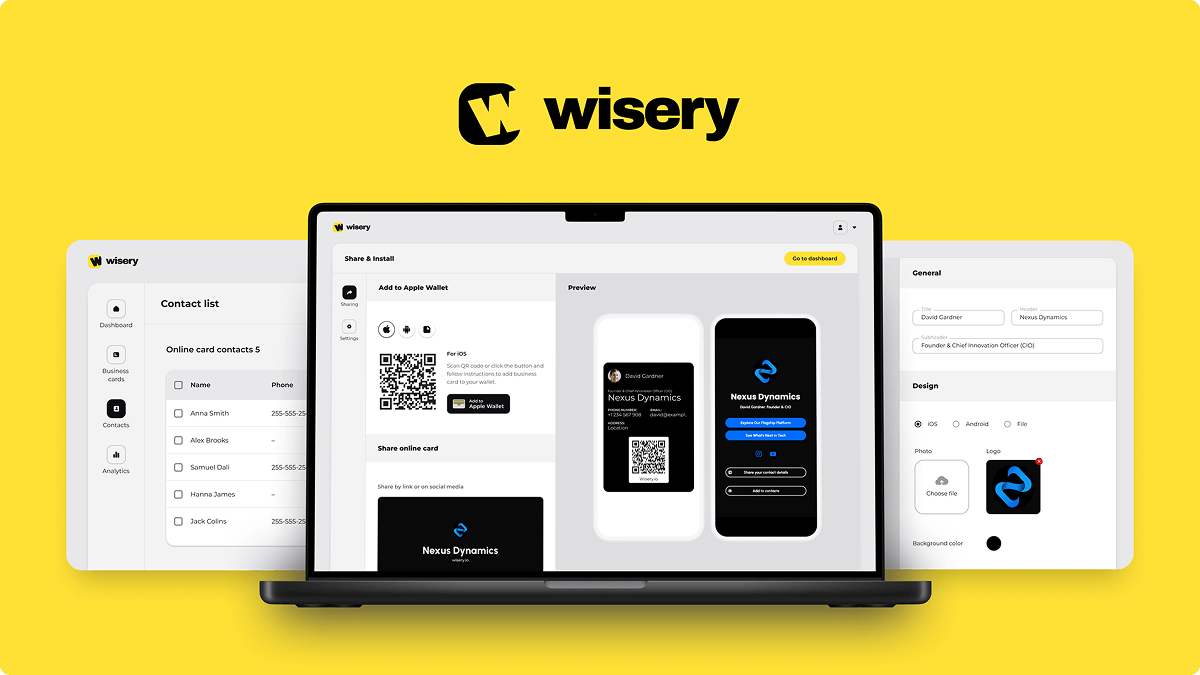
We also believed simplicity was a strength. Wisery was clean, easy to use, and focused on the core things people needed to create, share, and manage a digital business card.
At the same time, we knew the risk. Wisery was young, some competitors had more features, and AppSumo customers are very good at finding what is missing. That was uncomfortable, but it was also exactly why we needed the launch.
What We Expected – and What Actually Happened
We went into the launch with three goals: feedback, customers, and revenue.
Feedback was the most important. We wanted to understand what customers actually needed, rather than keep building around our own assumptions.
Our customer target was between 3,500 and 4,000. We wanted enough people inside the product to see patterns in behavior and feedback at scale. Our revenue target was around $35,000, which felt realistic before launch.
The final result was very different. We ended the campaign with 443 customers and around $6,500 in revenue on our side. We gained valuable insights, but we clearly missed our commercial targets. That mix is the most honest way to describe the launch.
The First 24 Hours: Strong Momentum, but Too Few Reviews
Launch day felt amazing.
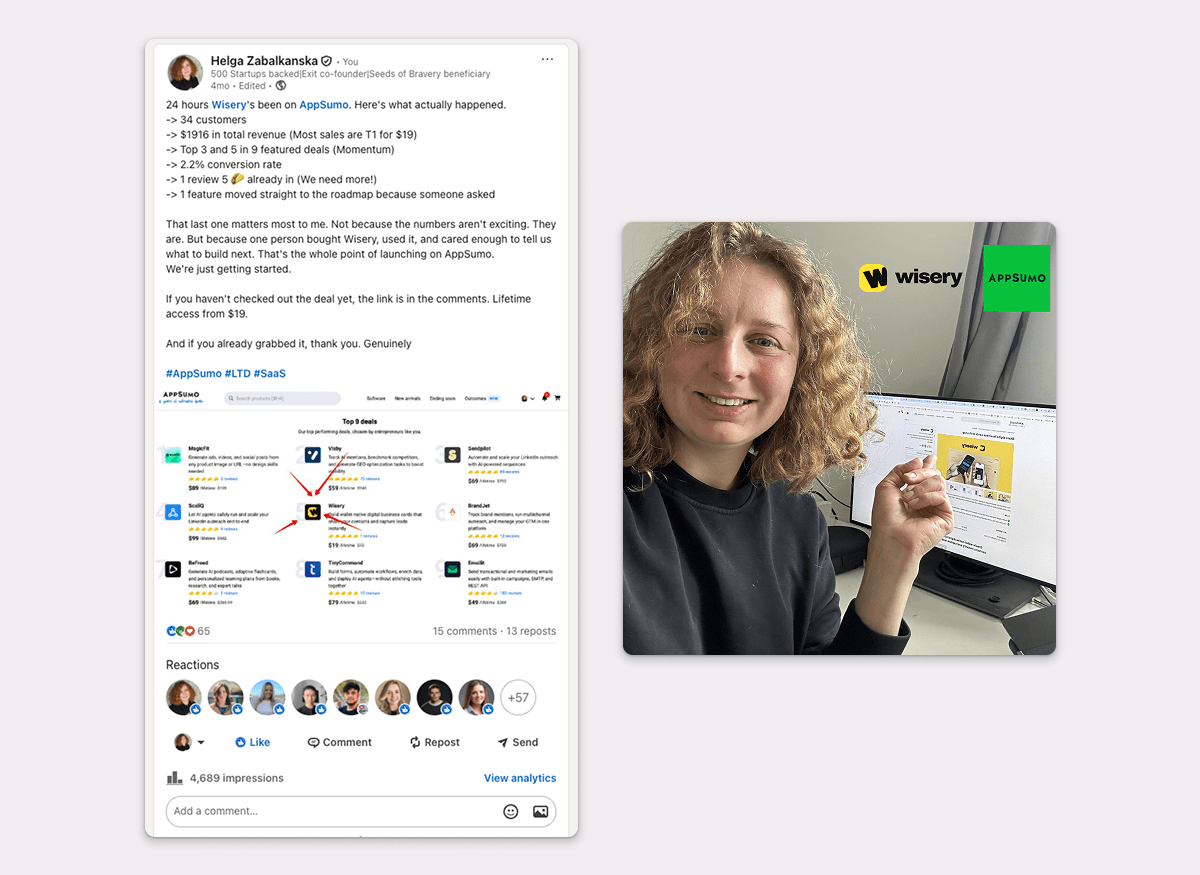
We got 34 customers and generated around $2,000 in early deal revenue. Wisery reached the Top 3 deals and later moved around the Top 5. Our conversion rate was around 10-12%, which felt like a very strong signal.
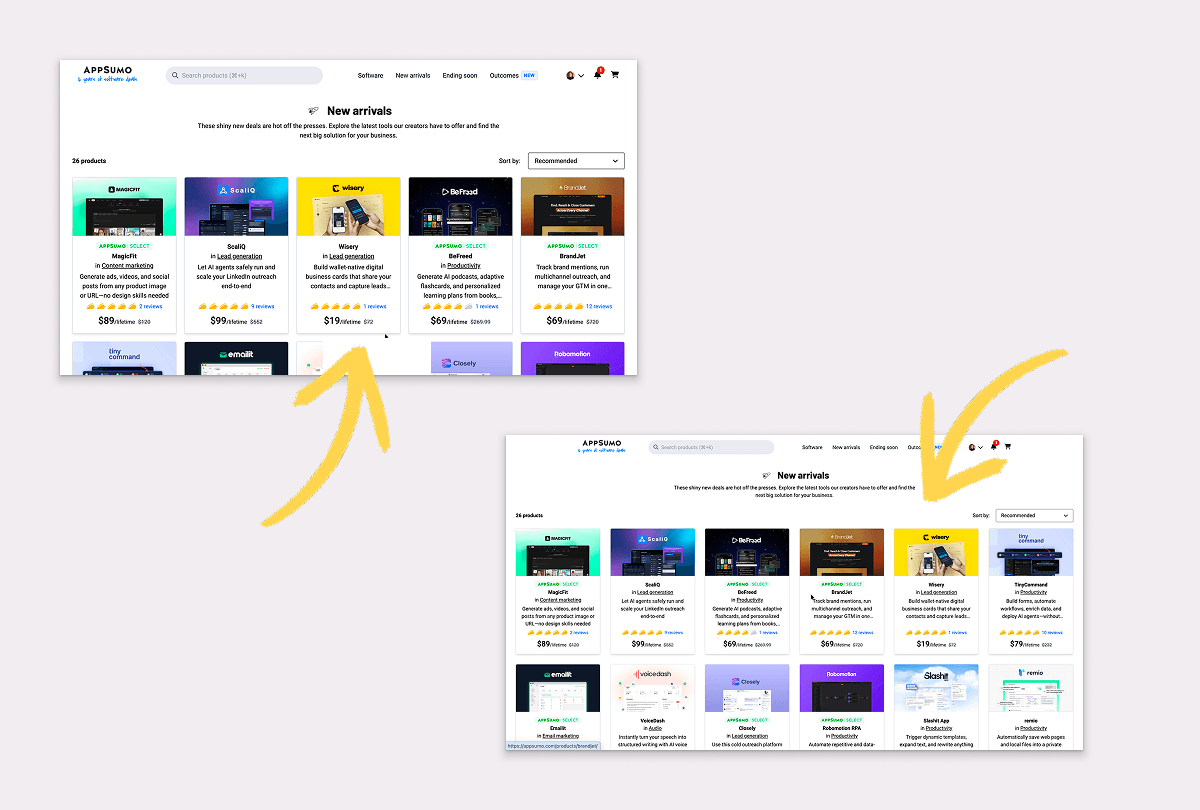
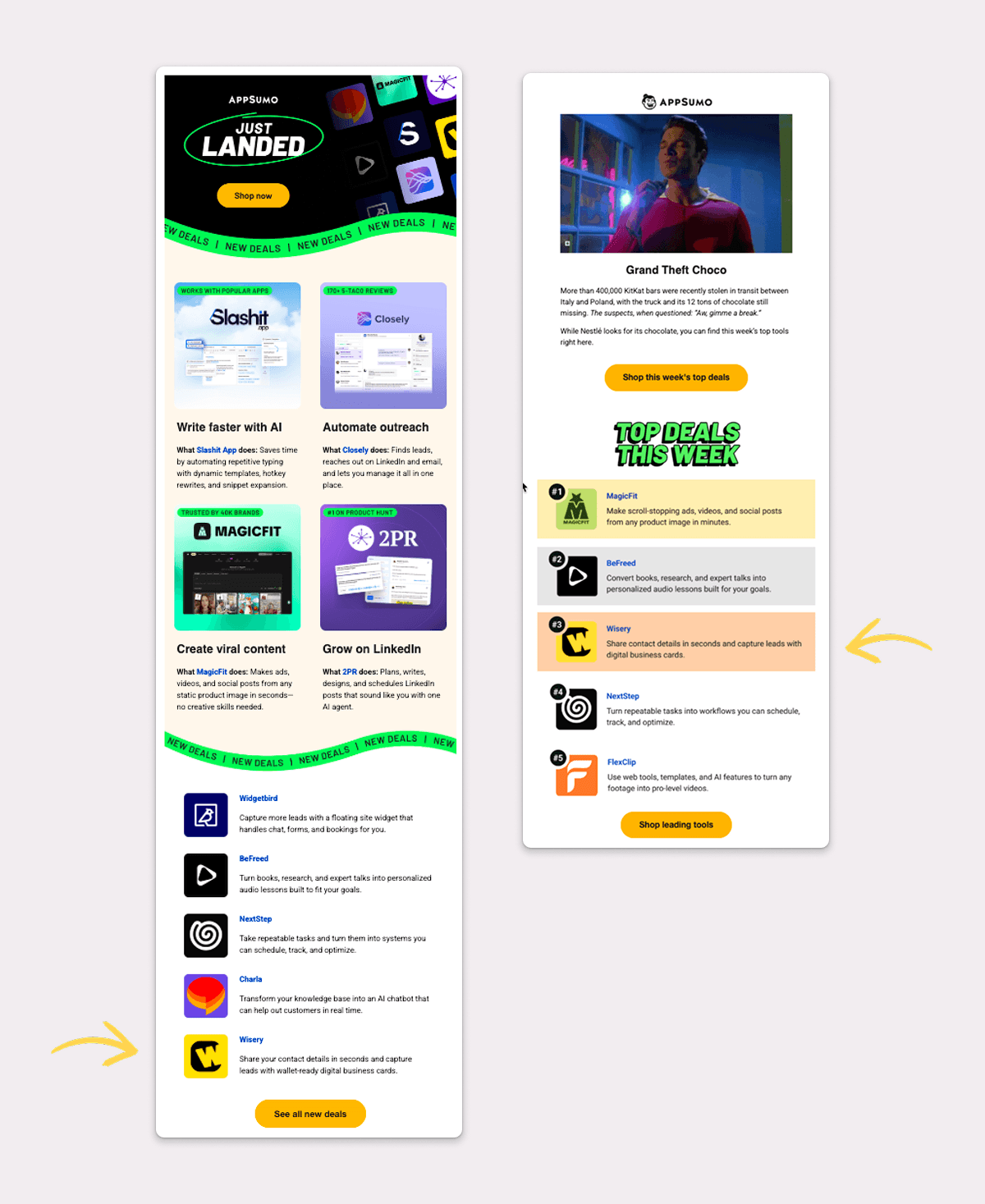
AppSumo included Wisery in its New Arrivals email on launch day. After we reached the Top 3, we were featured in another email with the top products of the week and listed at number three.
That strong start also encouraged me to ask our AppSumo account manager whether Wisery could remain in the homepage header for longer. He helped us extend that placement for an additional day.
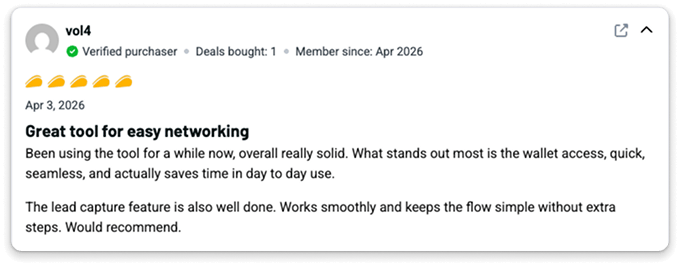
At that moment, it looked as if the launch could really take off. But there was a problem: we had only one 5-taco review.
For our launch, reviews were more than social proof. They affected trust and visibility. More visibility brought more traffic and purchases, while too few early reviews made that momentum difficult to protect.
The First Week Exposed the Review Problem
The first week was intense. AppSumo users asked questions, compared us with competitors, checked the roadmap, tested the product, and expected fast answers.
By the end of that week, we had around 130 customers. We also had our first YouTube reviews and mentions, including four during that early period. But we had only seven reviews on AppSumo.
This was when I understood that an AppSumo launch depends on a very fast activation, feedback, and trust loop. People discover the deal, try the product, read the questions and reviews, watch videos, and then decide whether to buy.
If customers do not activate quickly, reviews arrive late. When reviews arrive late, visibility can fall before the deal has had a real chance to grow. That is what happened to us.
Customer Feedback Changed Our Roadmap
Before the launch, I thought analytics would be one of the most important features for customers. I was wrong.
The top request was custom domains. The second was the ability to remove Wisery branding.
These requests were especially important to customers who bought tier 3 and tier 4. Many were agencies or people planning to use Wisery with clients. For them, custom domains and branding control were close to deal-breakers, not nice-to-have features.
The wider pattern was also clear. Customers wanted white-label options, a stronger agency plan, and better workflows for managing cards for clients or teams. This made us rethink both the roadmap and the way we positioned Wisery.
We promised to release custom domains quickly, and the feature immediately became our top priority. We shipped it two weeks after the launch.
That decision helped us retain higher-tier customers who could have requested a refund, showed customers that we were listening, and supported new purchases from people waiting for the feature. It was a clear example of feedback influencing the product and the business at the same time.
The AppSumo community could be supportive and generous, but also brutally honest. That honesty was sometimes hard to hear, yet it gave us something we could not create internally: a roadmap built around problems real customers were actively asking us to solve.
The Urgency Problem
One of the biggest lessons was that liking or buying a product does not mean someone will use it immediately.
If a customer is going to a conference tomorrow, they have a reason to create a digital business card today. Without an upcoming event, meeting, or networking situation, Wisery can stay “on the shelf.”
That became a problem during the launch. Customers bought the deal but delayed activation, which also delayed feedback and reviews.
If I launched again, I would build more urgency into the product experience. I would shorten the path to the first successful action and give customers a reason to create, test, and share a card right away – even if they did not have a conference tomorrow.
On AppSumo, early activation matters not only for retention, but also for visibility.
What We Did to Promote the Launch
AppSumo has a strong launch engine, but I learned that founders still need to create their own momentum.
I became much more active on LinkedIn than usual and published around 15 posts about the product, the launch, and what we were learning. The AppSumo team and community liked, commented on, and shared our content, and the team helped us make some of the messages more engaging.
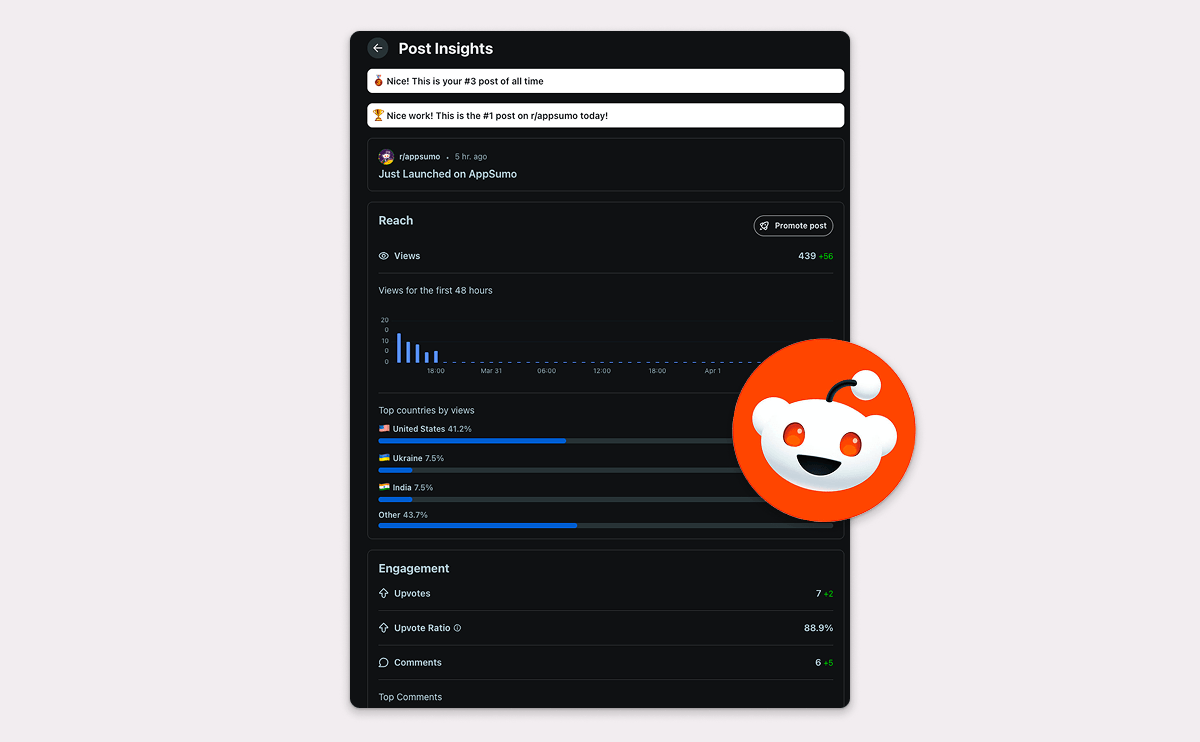
I also shared around six posts on Reddit. They were not only promotional: I wrote about our experience, asked questions, and supported other founders who were considering an AppSumo launch.
We emailed free Wisery users about the lifetime deal and worked with other products that had recently launched on AppSumo. Their audiences already understood lifetime deals, which made those partnerships useful.
YouTube was another important channel. We secured seven reviews and mentions. Some channels had around 18,000 subscribers, and one had around 102,000 subscribers.
These mentions helped with awareness and trust, but several arrived after the first few days, when we had already lost part of our momentum. The lesson was simple: good promotion delivered late cannot fully replace early visibility.
Personal Outreach Worked Better Than Automation
We also built automated campaigns asking customers for reviews. For example, after someone created a business card, they received an email asking about the experience and inviting them to leave an AppSumo review.
In theory, it made sense. In practice, it was not very successful.
So I began emailing customers one by one. It took a lot of time, but it worked better because it felt real. I was directly asking people what they liked, what we could improve, and whether they would review the product if they found it useful.
That experience reinforced something I already suspected: when a product is young, founder involvement matters. People want to feel that there is a real person behind it.
The Six-Week Campaign Had Three Very Different Stages
The full campaign lasted around six weeks, but the pace was not consistent.
The first two weeks were the most active. People discovered the deal, asked questions, bought, tested, and compared.
Then the middle became much slower. New deals appeared, attention moved elsewhere, and Wisery was no longer new. At one point, we were pushed to the second page, where sales could almost stop. The deal was still live, but it no longer felt alive.
The last call brought some activity back. AppSumo sent emails, customers understood that the deal was ending, and people who had been considering a purchase returned. We also increased our partnership activity. It helped, but it did not fully recover the momentum we had lost.
Beyond the customer and revenue totals, the campaign gave us:
- 35 AppSumo reviews;
- seven YouTube reviews and mentions;
- a much clearer roadmap; and
- a much better understanding of what customers expected from Wisery.
Many of those AppSumo reviews came after we had already lost early momentum. The final number mattered, but the timing mattered more.
The Team Behind the Launch
One thing I am really proud of is how involved the whole team was.
Our customer support team answered product questions quickly, helped people with setup, and made sure customers felt heard. During a launch like this, technical support becomes part of the product experience and part of the trust you build with customers.
Our work with the AppSumo team and YouTube creators was a different part of the story. Those collaborations helped us reach more people, negotiate opportunities, and extend the campaign’s visibility.
For me personally, the launch pushed me far outside my comfort zone. I recorded videos, posted constantly, contacted customers, and asked people for reviews, mentions, discounts, and support.
When YouTube prices were too high for us, I asked for a discount. One creator told me, “If you ask, you get it.” I asked – and received a 50% discount.
That sentence stayed with me. The same approach helped when I asked our AppSumo account manager about campaigns, mentions, and visibility. Not every request will work, of course, but many more things become possible when you simply ask.
What I Would Do Differently
If I launched Wisery on AppSumo again, I would change five things.
- Prepare properly for the agency audience. Many AppSumo customers buy tools for clients, not only for themselves. I would launch with the features and workflows they need, including custom domains, branding removal, white-label options, and easier card management for clients and teams.
- Build urgency into onboarding so customers create, test, and share their first card immediately.
- Plan the review strategy before launch, including when customers will reach a meaningful activation point and how I will ask for feedback personally.
- Schedule YouTube and partner campaigns for the first days, when their impact on trust and visibility is greatest.
Final Thoughts
Our AppSumo campaign was not a perfect success story, but I still see it as one of the most important steps in Wisery’s journey.
It gave us real customers, direct feedback, product validation, and a much stronger understanding of the features people truly care about.
We learned that lead capture is valuable, simplicity is a strength, and branding flexibility matters greatly to agencies and higher-tier customers. We also learned that early activation and reviews can shape visibility, speed builds trust, and founder involvement is one of the strongest growth tools available during a launch.
Most importantly, the launch gave us clarity.
Building a product is not about protecting your assumptions. It is about putting them in front of customers and being ready to hear the truth. Sometimes that truth is encouraging. Sometimes it is uncomfortable. But if you listen carefully and move fast, it can become your roadmap.
That is what AppSumo did for Wisery. It did not just bring us customers. It helped us understand what Wisery needs to become next.
About Author

Helga Zabalkanska is the Co-Founder and Chief Marketing Officer of Wisery, part of Solva. Wisery helps professionals and teams turn introductions into real business connections through digital business cards, online cards, and wallet-ready sharing.
With years of experience growing SaaS products, she specializes in product marketing, branding, growth strategy, and user experience. She is passionate about creating simple tools that solve everyday business challenges and help people connect in smarter ways.